Moom / made out of mussels
Material innovation from mussels.
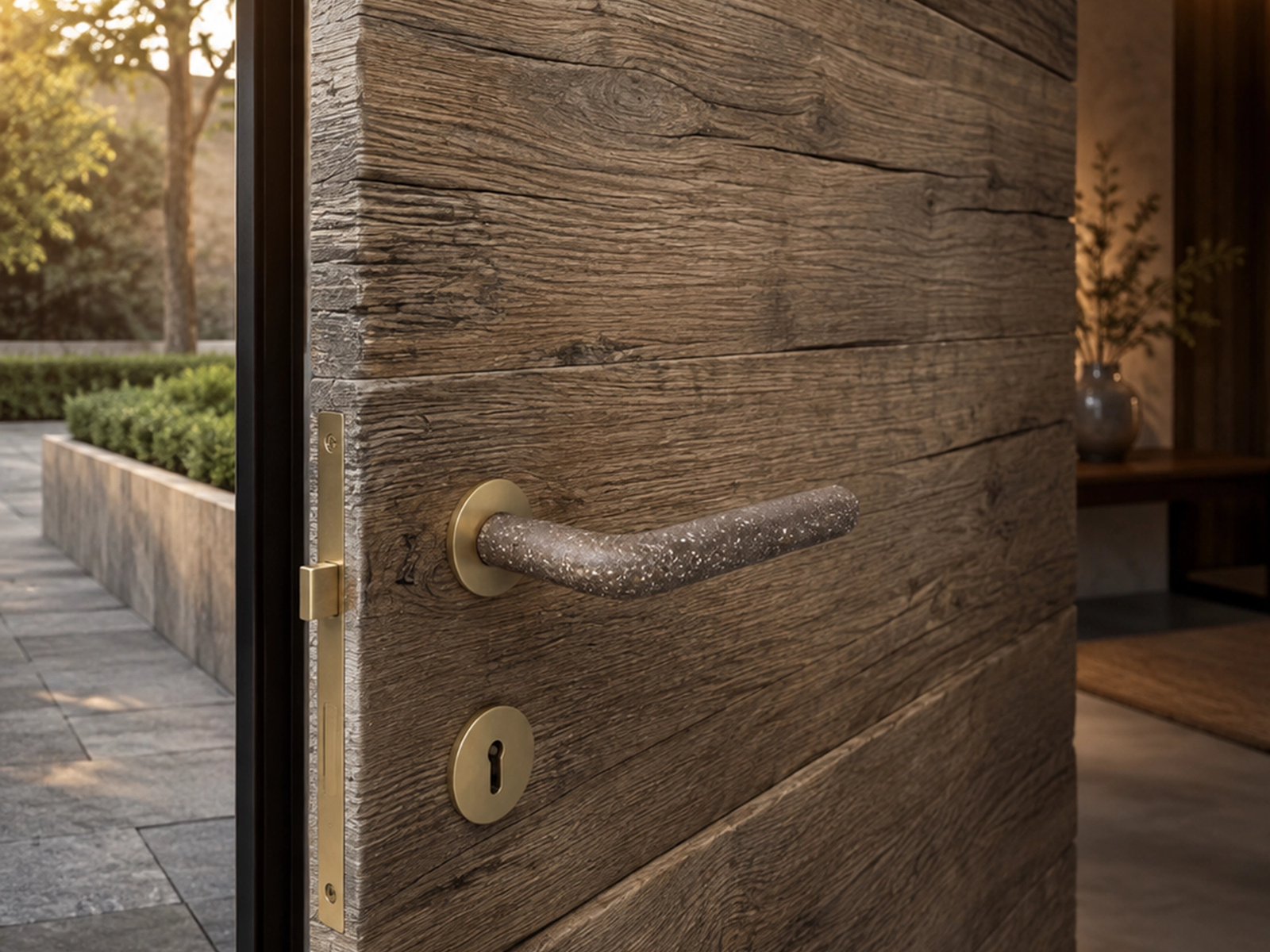
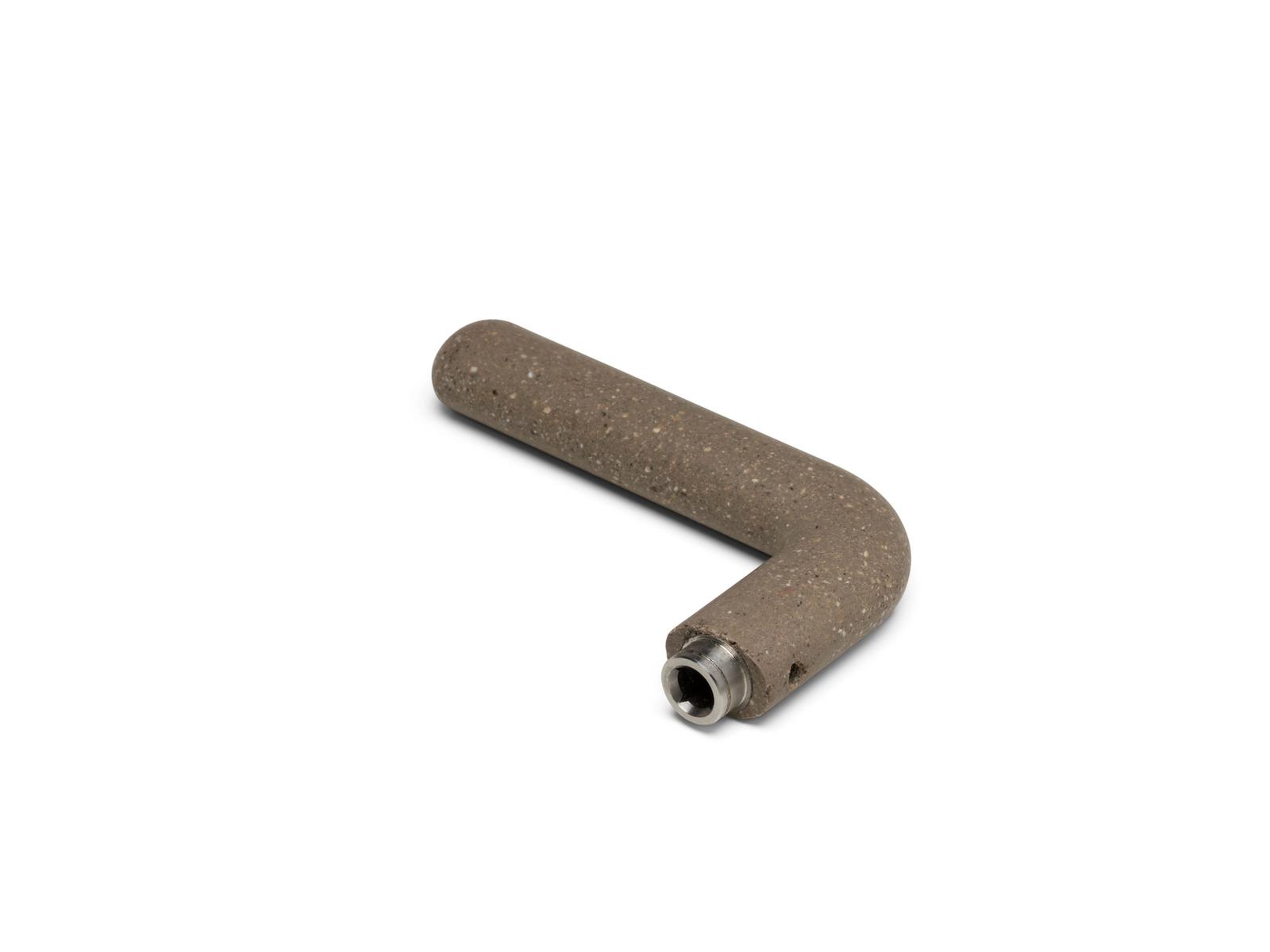
Moom transforms discarded mussel shells from the food industry into a new material for products across architecture and design. The material typically consists of 90% granulated shells, 8% bio-based binder, and 2% bio-based reinforcement. Heat-formed into a durable composite, it preserves the shells’ natural structure, color variations, and pearlescent surface, making these qualities part of the design. The first product is a functional door handle developed for Randi A/S and Eco Schulte GmbH, demonstrating hos, from furniture and lighting to facade cladding.
For every ton of mussels processed, around 30-40% (roughly 300-400 kg) is shell material. Much of this is discarded or sent to landfill, even though they contain valuable mineral resources. Moom transforms this residual material into long-lasting products, reducing the need for new mineral- and fossil-based raw materials. The shells do not absorb moisture and can withstand high temperatures, addressing two key challenges often associated with bio-based materials. Carbon bound in the shells remains stored when the shells are transformed into new products, adding another dimension to the material’s potential climate benefits.